
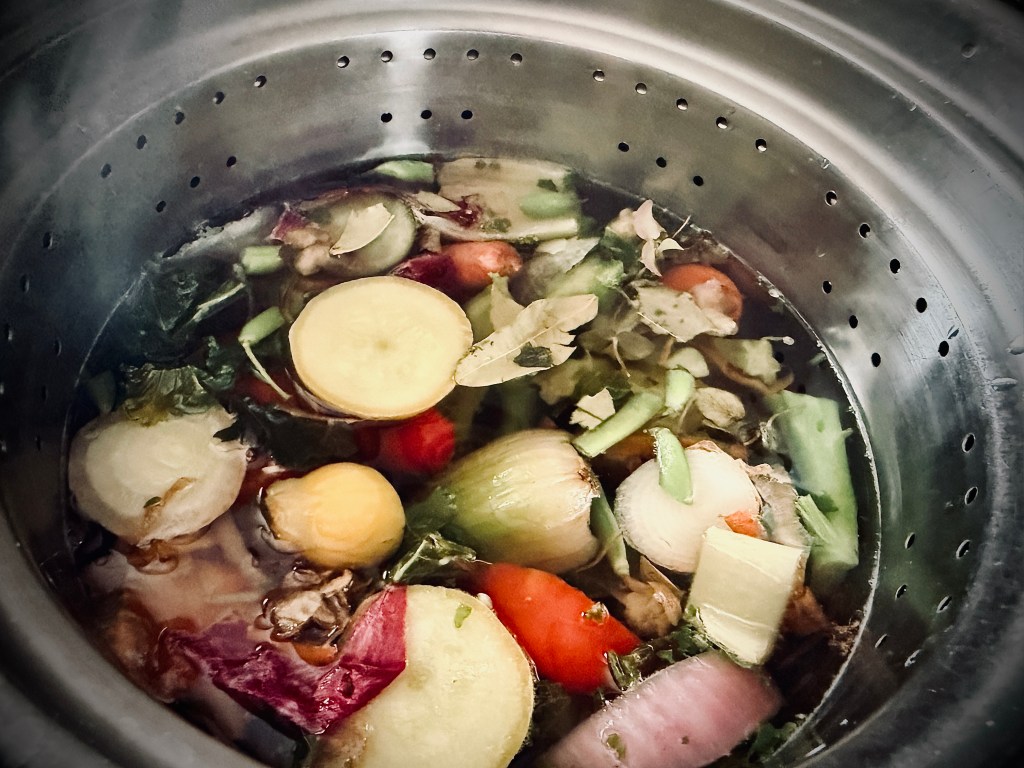
One of the easiest ways to stretch your grocery dollars and cut down on food waste is by turning everyday vegetable scraps into a beautiful, fragrant stock. Instead of tossing onion ends, carrot peels, or celery leaves into the trash, you can stash them in the freezer and, before you know it, you’ll have enough to make a rich, homemade broth.
⸻
How It Works
Keep a clean, labeled gallon freezer bag tucked in your freezer. As you cook, add your washed scraps, everything from onion skins to mushroom stems. Over time the bag fills up, and once it’s full, you’ve got the makings of your next pot of stock.
⸻
What to Save and What to Skip:
Great scraps for stock:
• Onion peels and ends
• Carrot peels and tops
• Celery leaves and ends
• Leek greens
• Mushroom stems
• Corn cobs
• Parsley or cilantro stems
Skip these for a better flavor:
• Broccoli
• Cauliflower
• Brussels sprouts
• Cabbage
• Anything spoiled or slimy
⸻
A Secret Flavor Boost of Fresh Herbs
A simple trick to elevate your stock is to add a handful of fresh herbs directly to your freezer bag as you go. Sprigs of thyme, rosemary, parsley, basil, oregano or even a few bay leaves, whatever you may have from your garden will freeze beautifully alongside your scraps. When simmered later, they release a subtle aroma and flavor that makes your broth smell like you’ve been cooking all day.
⸻
Why We Love It
• Zero Waste: You’re giving new life to scraps that would otherwise go in the trash or compost.
• Budget Friendly: Homemade stock saves money compared to store bought cartons.
• Totally Customizable: You control what goes in, no excess salt or mystery ingredients so every batch reflects your kitchen’s flavors.
• Aromatherapy While You Cook: Adding fresh herbs fills your kitchen with a cozy, savory scent that makes even a simple pot of soup feel special.
⸻
How to Turn Your Scraps Into Stock
When your bag is full, dump the frozen scraps into a large pot, cover with water by about an inch or two, and simmer gently for 45–60 minutes. Strain out the solids, let the stock cool, and freeze or refrigerate for later use, or you’re ready to go to continue with your favorite recipe.
You can store your homemade stock in freezer safe containers or even mason jars, just be sure to leave a little headspace at the top if freezing so the liquid has room to expand.
Use your stock for future soups, stews, risottos, and more. Every time you open a jar, you’ll smell the herbs you tucked away and remember that you created something wholesome from what used to be waste. Take a moment to enjoy the flavor, the savings, and the satisfaction of making something from scratch.
 againstthegrain.blog
Leave a comment